
What Is a Part X Personal Insolvency Agreement?
By Doug Constable · 19 November 2026
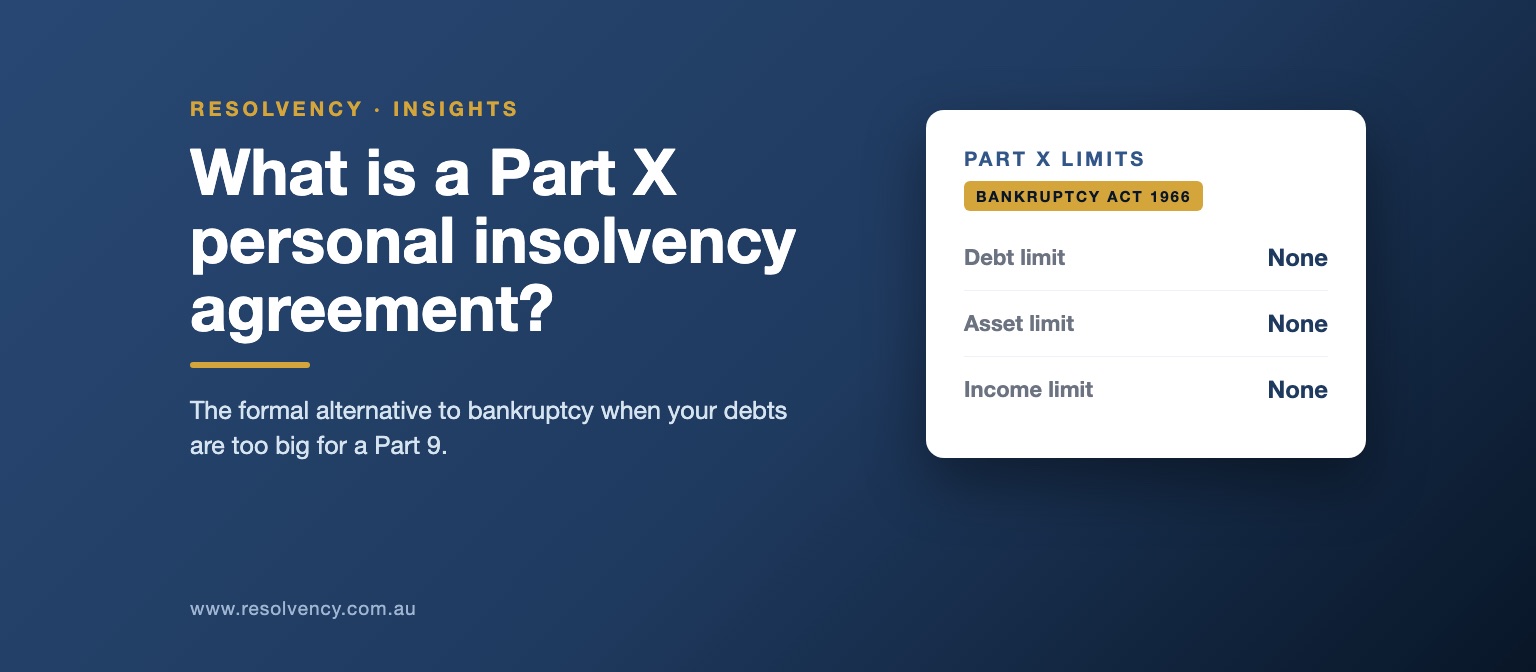
A Part X personal insolvency agreement (PIA) is a formal, binding deal with your creditors that avoids bankruptcy, and unlike a Part 9 debt agreement, there are no limits on how much you owe, own or earn. It's the option built for bigger debts and more complex affairs. Here's how it works, what it costs you, and when it makes sense.
What is a Part X?
A personal insolvency agreement is set up under Part X (ten) of the Bankruptcy Act 1966. You appoint a registered trustee to take control of your property and put an offer to your creditors. That offer can be a lump sum, instalments, the sale of certain assets, contributions from family, or a mix. If enough creditors vote yes, the agreement binds all your unsecured creditors, including the ones who voted no.
The point is flexibility. A Part X can be shaped around your situation in a way bankruptcy and debt agreements can't.
Who can use one?
You must be insolvent, meaning you can't pay your debts as and when they fall due. That's the key test.
There are no debt, asset or income limits. That's the big difference from a Part 9 debt agreement, which closes the door once your unsecured debts pass $155,773.80 or your after-tax income passes $116,830.35. If you're over those lines, a Part X is the main formal alternative to bankruptcy. See our article on Part 9 debt agreement eligibility for the full limits.
That makes a Part X common for business owners with personal guarantees, people with large ATO debts, property owners, and higher earners.
How the process works
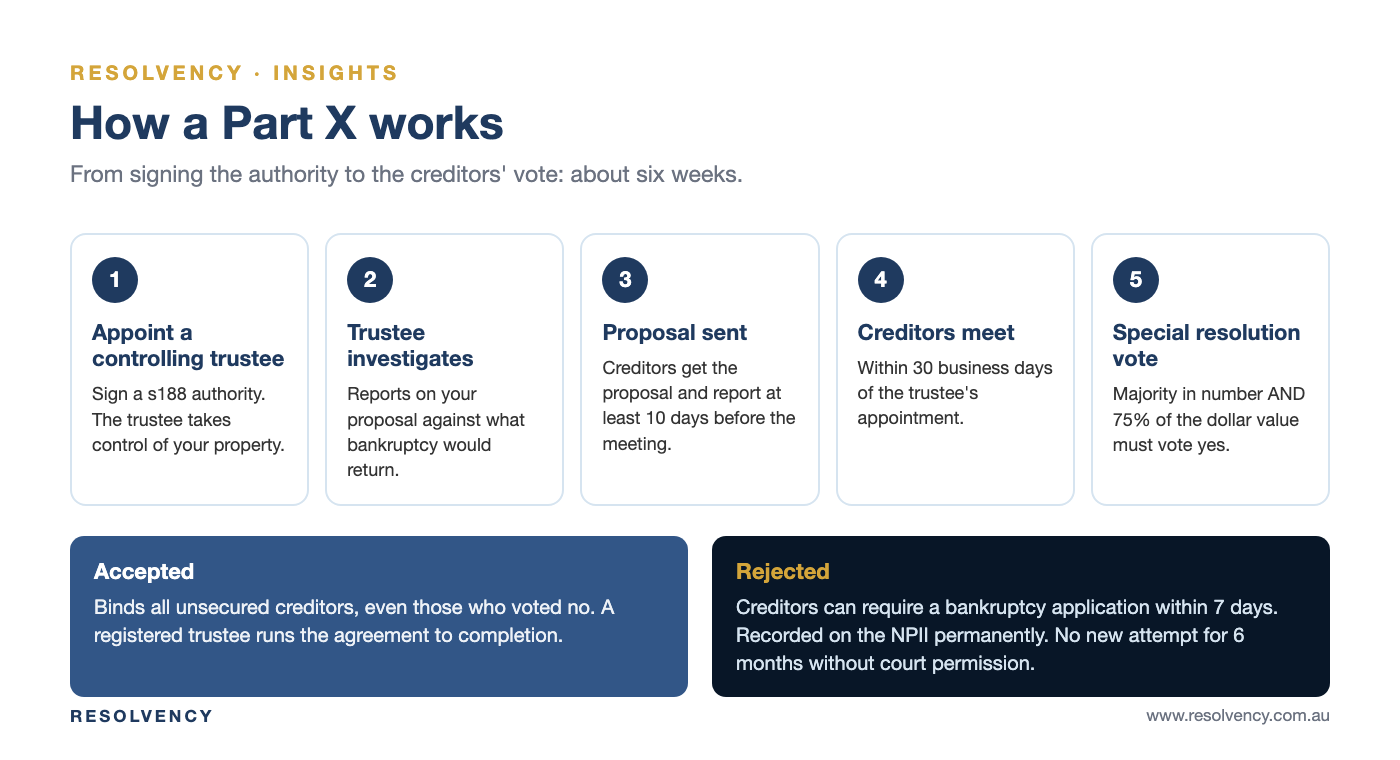
- You appoint a controlling trustee. You sign an authority (under section 188) appointing a registered trustee. From that point they control your property, and you can't deal with it without their consent.
- The trustee investigates and reports. They look at your affairs and prepare a report comparing what creditors would get from your proposal against what they'd get if you went bankrupt.
- Creditors meet. A meeting of creditors is held within 30 business days of the trustee's appointment. Creditors get the proposal and report at least 10 days before.
- Creditors vote. The proposal needs a special resolution: a majority in number of creditors voting, who also hold at least 75% of the dollar value.
- The agreement runs. If accepted, a registered trustee administers it until the terms are completed.
If creditors say no
A rejected proposal isn't neutral. Creditors can vote to hand control back to you, or to require you to present your own bankruptcy application within 7 days. The rejection goes on the National Personal Insolvency Index permanently, you can't appoint another controlling trustee for 6 months without the court's permission, and creditors can resume recovery action. Any creditor owed more than $10,000 can apply to make you bankrupt.
That's why the groundwork matters. A Part X should go to creditors with a proposal that already stacks up against bankruptcy, not as a hopeful first offer.
What it costs you beyond the dollars
- Signing the authority is an act of bankruptcy. If the arrangement fails, a creditor can use it to petition for your bankruptcy.
- It's on the public record for good. Your details stay on the National Personal Insolvency Index permanently.
- It hits your credit file for up to 5 years, or longer in some cases.
- You can't manage a company until the agreement is finalised. This one catches directors out. If you run your business through a company, plan for it before you sign.
- There are trustee fees to set up, propose and run the agreement. They vary between trustees, so get them in writing and make sure they're in the proposal.
Watch the release clause
A PIA only releases you from your debts if the agreement says so. Make sure it includes a release from all provable debts once you've met your obligations. Some debts sit outside it regardless: court fines, debts incurred by fraud, maintenance orders and HELP debts. Secured debts like your mortgage or car loan aren't released either, so those payments need to keep going.
Part X or Part 9?
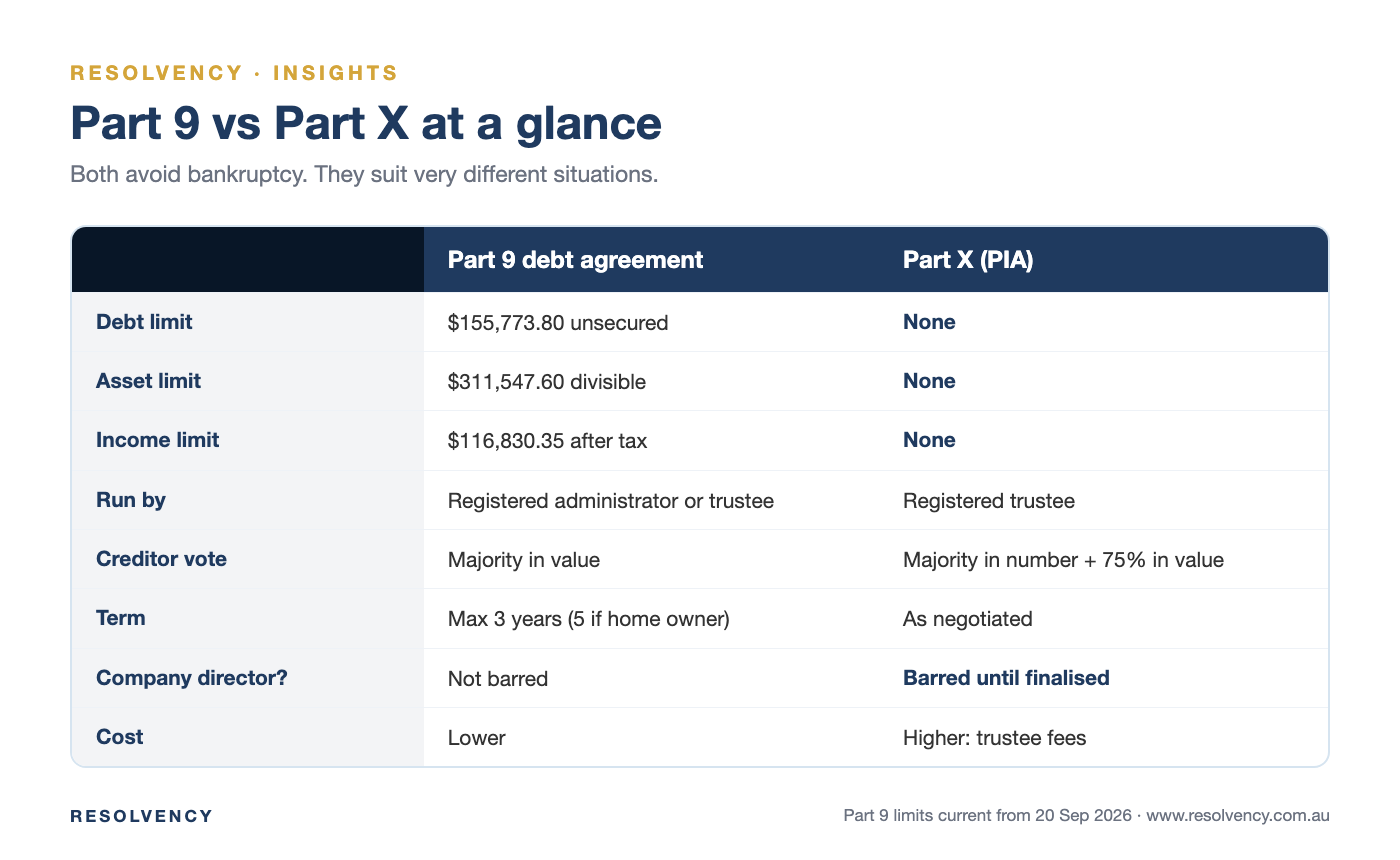
A Part 9 debt agreement is cheaper and simpler, but only if you fit under the limits. A Part X costs more and takes more work up front, but it handles bigger numbers, more creditors and more complex assets. Neither is automatically better. The right answer depends on your debts, your assets, your income and what your creditors are likely to accept.
That's what we sort out first. We look at the whole picture, test the options against each other, and coordinate with the right registered trustee for the path that fits. Fixed fees, no surprises.
Common questions
What is a Part X agreement?
A Part X, or personal insolvency agreement, is a legally binding deal between you and your creditors under Part X of the Bankruptcy Act. It lets you settle your debts without becoming bankrupt.
Are there debt limits for a Part X?
No. There are no debt, asset or income limits for a personal insolvency agreement. You do need to be insolvent.
How do creditors accept a Part X proposal?
By special resolution at a meeting of creditors: a majority in number of creditors voting, who also hold at least 75% of the dollar value of the votes.
Can I be a company director while in a Part X?
No. You can't manage a corporation until the terms of the agreement are finalised.
What happens if creditors reject my Part X?
Creditors can return control of your property to you or require you to present a bankruptcy application within 7 days. The rejection is recorded permanently on the National Personal Insolvency Index.
Weighing up a Part X, a Part 9 or bankruptcy? Call us on 0457 099 099 for a confidential, no-obligation chat about where you stand.
Facing this yourself?
Start with the free guide, or talk to us directly.
Private and confidential.