
Part 9 Debt Agreement Eligibility: 2026 Thresholds
By Doug Constable · 19 November 2026
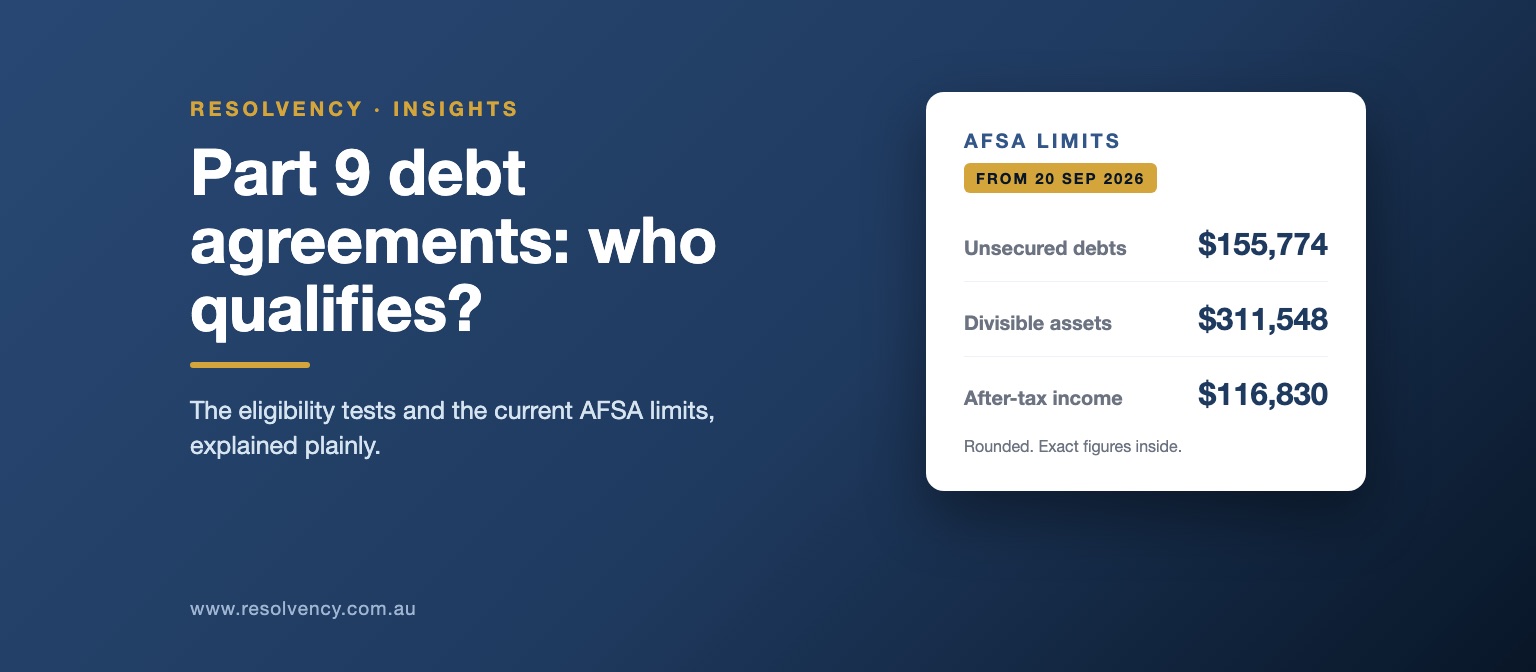
A Part 9 debt agreement lets you settle your unsecured debts through a formal, binding deal with your creditors, without going bankrupt. But not everyone qualifies. You must be insolvent, sit under three dollar limits set by AFSA, and have a clean 10-year history. Here's how the tests work, with the current figures.
What is a Part 9 debt agreement?
A debt agreement is a legally binding arrangement under Part IX of the Bankruptcy Act 1966. You offer your creditors an amount you can afford, usually paid over three years. If a majority of creditors (by value) vote yes, the agreement binds all of them. Interest stops, collection calls stop, and once you finish the payments you're released from the debts it covers.
It's a formal insolvency option, not a casual payment plan. That matters, because it comes with consequences as well as protection.
The eligibility tests
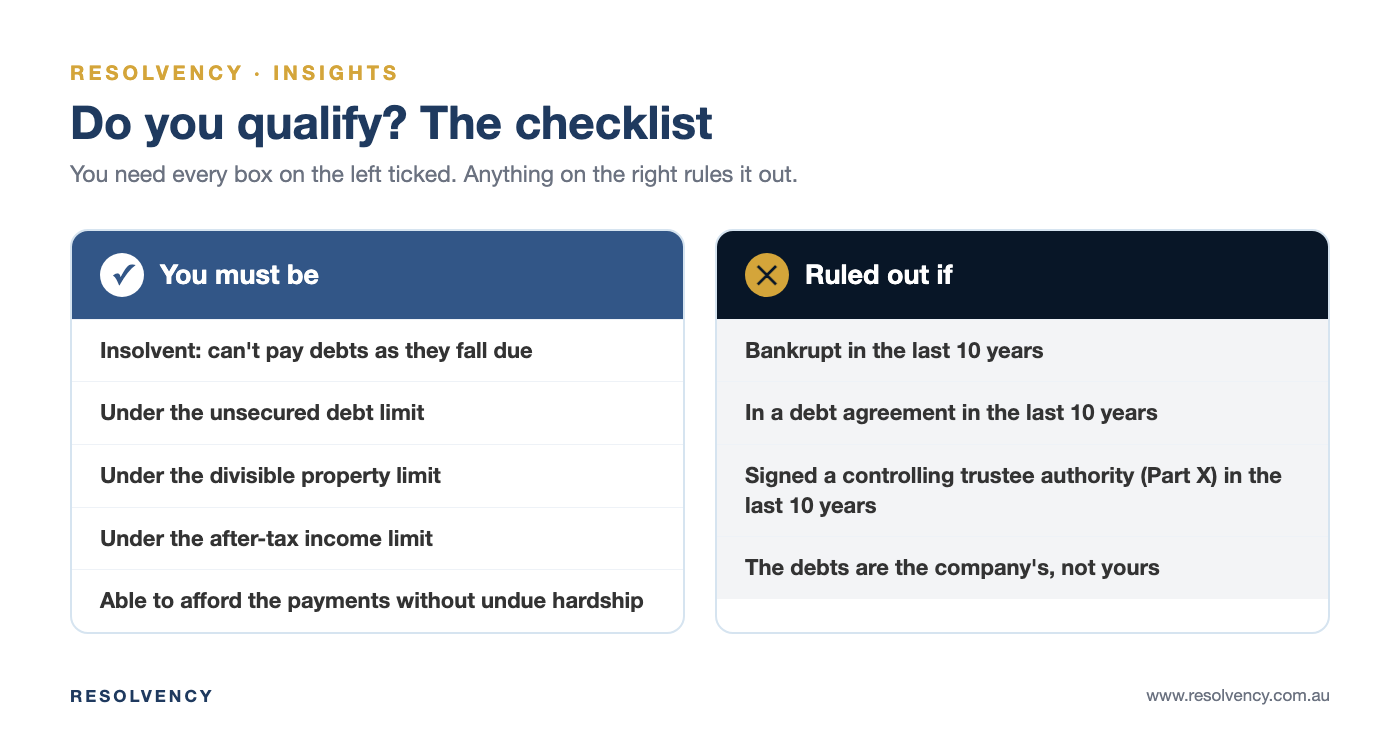
You can only propose a debt agreement if you meet every one of these:
- You're insolvent. You can't pay your debts as and when they fall due.
- No bankruptcy, debt agreement or personal insolvency arrangement in the last 10 years. If you've been bankrupt, been in a debt agreement, or signed a controlling trustee authority (the first step of a Part X personal insolvency agreement) in that time, the door is closed.
- Your unsecured debts are under the limit. Credit cards, personal loans, BNPL, tax debts, utility arrears and personal guarantees all count. Secured debts like a home loan don't.
- Your divisible property is under the limit. This is property a trustee could sell if you were bankrupt, so it excludes protected items such as household goods and tools of trade under the set limits.
- Your after-tax income for the next 12 months is under the limit.
The current threshold figures
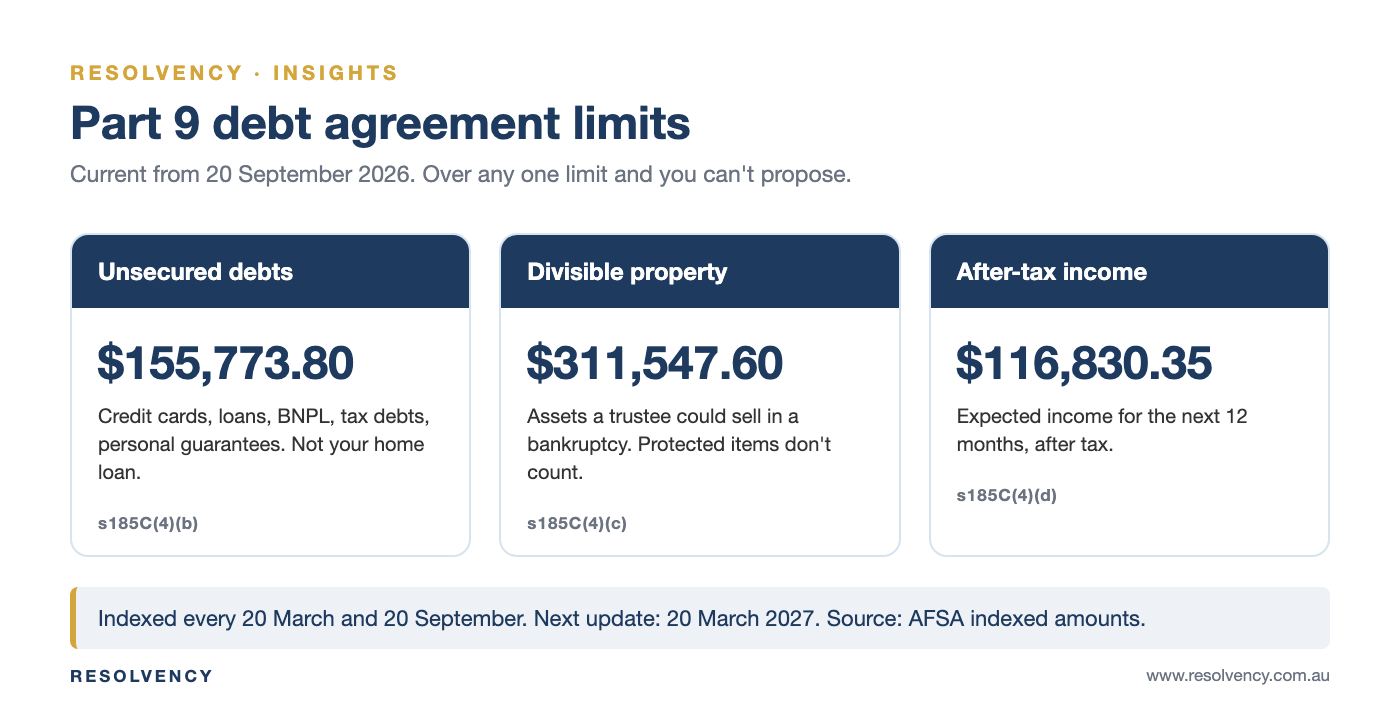
AFSA re-indexes these limits every 20 March and 20 September. The figures below are current from 20 September 2026.
| Test | Limit | Bankruptcy Act |
|---|---|---|
| Unsecured debts | $155,773.80 | s185C(4)(b) |
| Divisible property (assets) | $311,547.60 | s185C(4)(c) |
| After-tax income (next 12 months) | $116,830.35 | s185C(4)(d) |
The income limit is 1.5 times the Base Income Threshold Amount used for bankruptcy income contributions ($77,886.90 after tax). AFSA has no discretion here. Go a dollar over any limit and the proposal can't be lodged.
The next indexation is due 20 March 2027. Always check the figures on the AFSA indexed amounts page before you rely on them.
Rules the proposal itself has to meet
- It has to be affordable. Your payments must fit within the payment-to-income ratio set by the government, and you must certify the agreement won't cause you undue hardship.
- Three years maximum. The term can stretch to five years only if you own or part-own the home you live in and the agreement lets you keep it.
- A registered administrator runs it. It must be administered by a registered debt agreement administrator or a registered trustee.
- Creditors vote. It's accepted if a majority in value of the creditors who vote say yes. If they vote it down, you're back where you started, minus the time.
- AFSA can refuse to process it. Common reasons are failing a threshold, incomplete or false information, or a proposal that clearly isn't affordable.
What it costs you beyond the payments
- Lodging a proposal is an act of bankruptcy. If it fails, a creditor can use that to bankrupt you.
- It's on the public record for good. Your name stays on the National Personal Insolvency Index permanently.
- It hits your credit file. It stays there for five years from the date the agreement is made, or two years after it ends, whichever is later.
- It's personal only. A debt agreement can't deal with company debts. It can include personal guarantees you've signed as a director, but it does nothing for the company itself.
Is it the right option?
A debt agreement works well for someone with steady income, a manageable debt load and assets they want to protect. It's often the wrong choice where the income is unstable, where the debts are mostly tied to a company, or where a negotiated settlement with one or two creditors would do the job without going on the public record at all.
We've seen people locked into five-year agreements they couldn't sustain, when a direct deal or a different structure would have cost them less. The test isn't just "do I qualify?" It's "is this the best way out for me?"
That's where we come in. We look at the whole picture, compare the options side by side, and coordinate with the right registered practitioner for the path that fits. Fixed fees, no surprises.
Common questions
What is the debt limit for a Part 9 debt agreement in 2026?
From 20 September 2026, your unsecured debts must be no more than $155,773.80. The limit is indexed every March and September.
What is the income limit for a debt agreement?
Your after-tax income for the next 12 months must be no more than $116,830.35 (from 20 September 2026).
What is the asset limit for a debt agreement?
Your divisible property must be no more than $311,547.60 (from 20 September 2026). Protected assets, such as household items within set limits, aren't counted.
Can I do a debt agreement if I've been bankrupt before?
Not if you've been bankrupt, in a debt agreement, or signed a controlling trustee authority in the last 10 years.
Does a debt agreement cover company debts?
No. It only covers your personal debts. Director personal guarantees can be included, but the company's own debts need a separate solution.
Not sure if a debt agreement is your best option? Call us on 0457 099 099 for a confidential, no-obligation chat about where you stand.
Facing this yourself?
Start with the free guide, or talk to us directly.
Private and confidential.