
Free 6-Week Cash Flow Forecast: Spot a Cash Gap Early
By Doug Constable · 15 November 2026
When my own business went under in 1988, the warning signs were there months before the end. I just wasn't looking at the right numbers. I was watching sales and the bank balance. Neither told me that the money coming in would land weeks after the money going out.
Most of the business owners who ring me now are in the same spot. The work is there, the invoices are out, and somehow the wages, the supplier account and the BAS all land in the same fortnight. By then the ATO is writing letters and the options are shrinking.
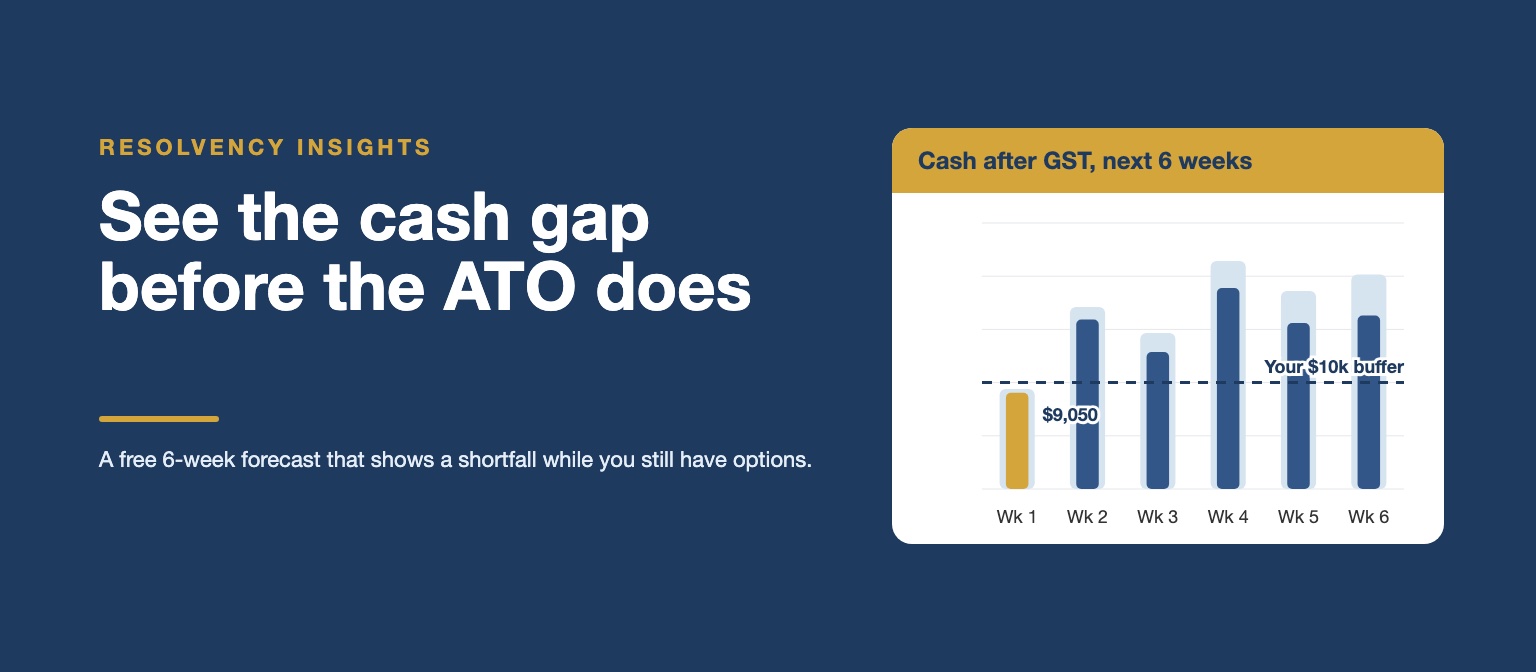
A six-week cash flow forecast fixes the "didn't see it coming" part. I've put together a free one you can download and fill in today.
Download the free 6-Week Cash Flow Forecast (Excel, works in Google Sheets and Numbers)
Why six weeks matters
Six weeks out, a cash gap is a planning problem. You can chase debtors, push back a purchase, ask suppliers for time, or talk to the ATO about a payment plan before anything is overdue. Six days out, the same gap is a crisis, and the cheapest options are gone.
The ATO is a good example. Lodge on time and ask for a payment plan before the due date, and you're dealing with a creditor. Miss the BAS, stop lodging, and let PAYG and super slide, and you can end up with a Director Penalty Notice that makes the company's tax debt your personal problem.
Your bank balance is lying to you
If you're registered for GST, part of every customer payment belongs to the ATO. It sits in your account until the next BAS, and it's very easy to spend.
The forecast works out the GST building up in your account and shows a second line: the cash that is really yours. That's the number to run the business on.
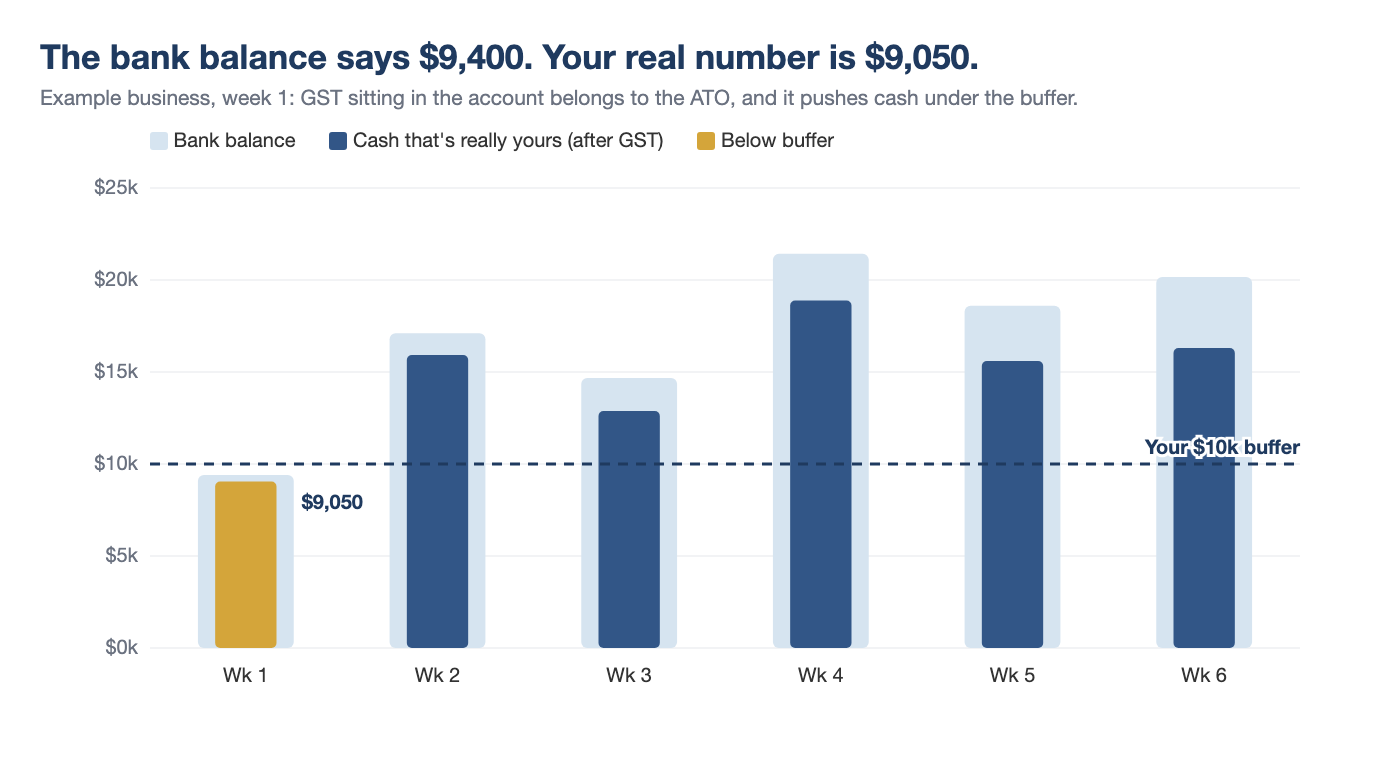
In the example business in the spreadsheet, the bank says $9,400 at the end of week 1. Take out the GST already collected and it's really $9,050, under the owner's $10,000 buffer. That's the week an owner skips the BAS to pay wages, and it's how a lot of ATO debt starts.
How to fill it in
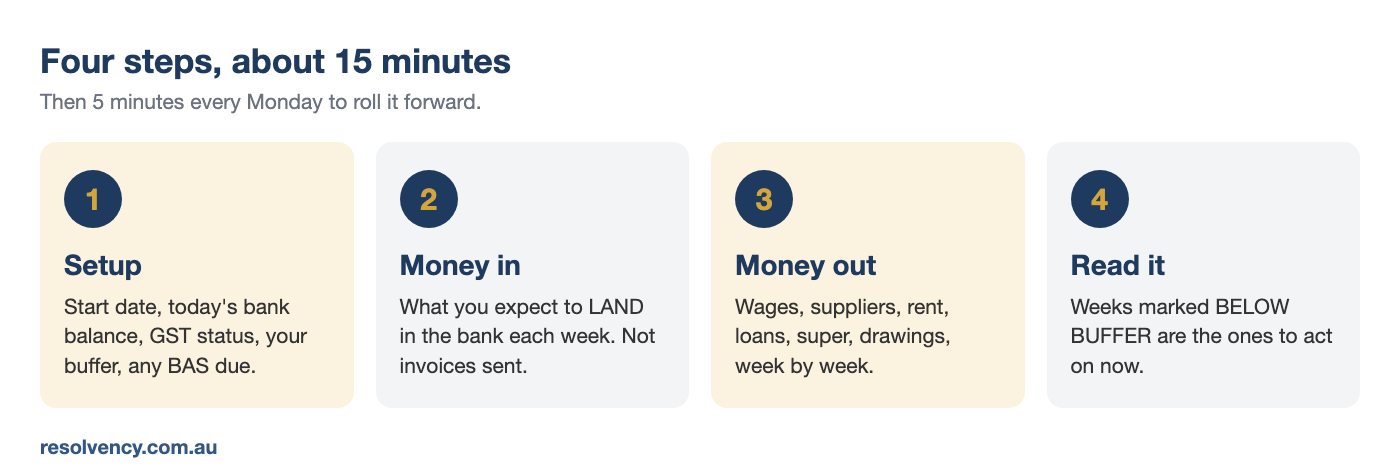
- Setup: the Monday you're starting from, today's bank balance, whether you're registered for GST, the lowest balance you're comfortable holding, and any BAS or ATO payment due in the next six weeks.
- Money in: what will actually land in the bank each week. Not what you've invoiced. If a customer always pays late, put it in the week it really arrives.
- Money out: wages, PAYG, super, suppliers, rent, loans, vehicles and your own drawings, in the week each one leaves the account.
- Read it: any week marked BELOW BUFFER is a week to deal with now.
Then update it every Monday. Five minutes a week, and you'll never be blindsided by a fortnight again.
Timing problem or something bigger?
If one week dips and the next ones recover, it's a timing problem. The spreadsheet has a tab of practical fixes: chase overdue invoices by phone, bill sooner, ask suppliers for longer terms, trim drawings for a few weeks, and talk to the ATO before a payment falls due.
If the gap gets bigger every week, it isn't timing. The business is spending more than it brings in, and no amount of juggling will fix that on its own. That's when you need to look at the real options, while you still have them: a proper payment arrangement, a Small Business Restructuring plan, or in some cases winding up in an orderly way rather than having it forced on you.
Common questions
How far ahead should a small business forecast cash flow?
Six to thirteen weeks for day-to-day cash management. Six weeks is enough to see a problem and act on it, and short enough that your numbers are reliable.
Should my cash flow forecast include GST?
Yes. Enter amounts as they hit the bank, including GST, then take the GST you owe out of the balance. Otherwise your forecast shows money that belongs to the ATO as if it were yours.
What's the difference between a cash flow forecast and a budget?
A budget shows whether you'll make a profit over a year. A cash flow forecast shows whether you'll have enough money in the bank each week to pay what's due. Profitable businesses still fail when the timing is wrong.
What should I do if my forecast shows I can't pay the ATO?
Lodge on time anyway and contact the ATO before the due date to ask about a payment plan. Not lodging makes everything harder and can expose directors to personal liability for PAYG withholding and super.
When is a cash shortfall a sign of insolvency?
When the business can't pay its debts as and when they fall due, and the gap keeps growing rather than recovering. If your forecast shows that, get help early. Directors have obligations once a company is insolvent.
Where I fit
I'm not a liquidator, a lawyer or a tax agent. I coordinate. I look at where the business really stands, deal with the ATO conversations, and connect you with the right practitioner if you need one. I work for you, not the creditors, and I've been doing this since 1988.
If your forecast shows a gap you can't close, book a phone or video time at resolvency.com.au/book or call 0457 099 099.
Download the free 6-Week Cash Flow Forecast
General information only, not financial, legal or tax advice. Everyone's position is different, so get advice specific to yours before you act.
Related service: ATO Debt & Payment Pressure: see how I can help.
Facing this yourself?
Start with the free guide, or talk to us directly.
Private and confidential.